 | Mariana Derzsi
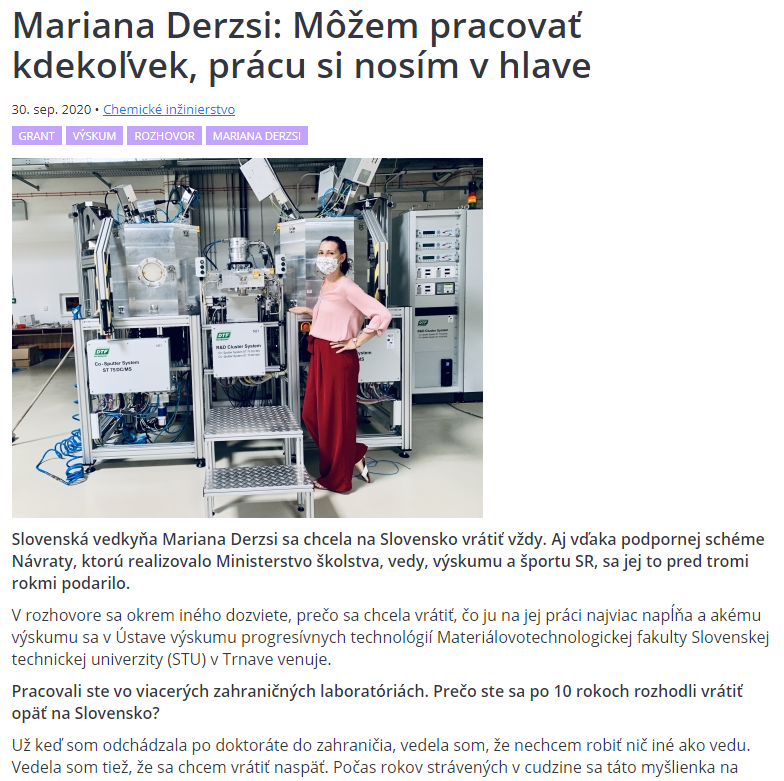
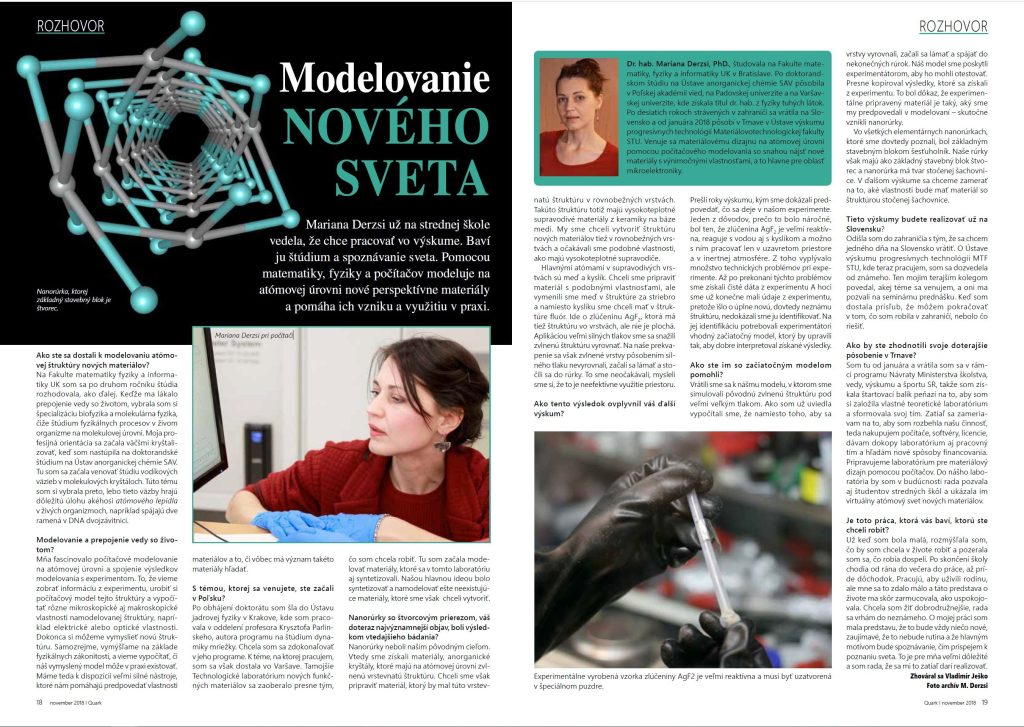
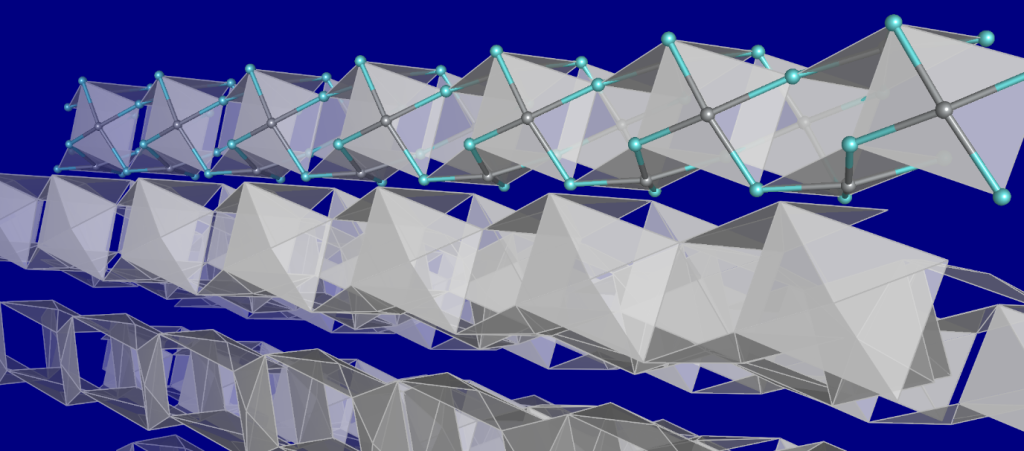
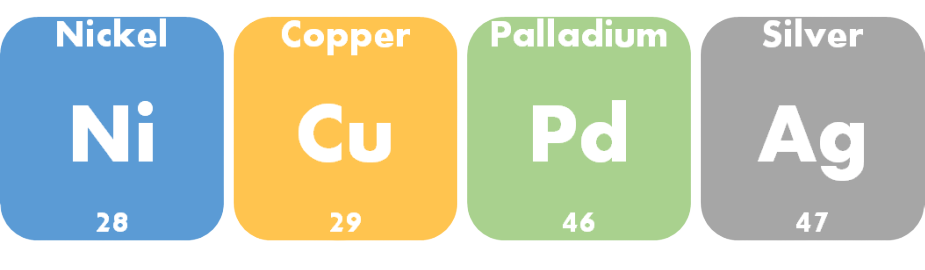
My expertise is atomic-scale modelling and design of novel crystalline matter using DFT based methods. The hallmarks of my research are late transition metals. Among the most exciting discoveries I took part in are compounds based on silver(II) including novel form of nanotube,anomalously strong antiferromagnet, a silver analogue of layered oxocuprates or potentially first member of Ag2+-based multiferroic. In my on-going projects, my goal is to explore along similar lines a hidden potential of other fascinating late-transition metals starting with simple binary oxides and halides. Very little is known about structural diversity and properties of these systems in comparison to their intensively technologically exploited earlier-transition counterparts. Much is yet to be discovered and a very exciting journey is ahead of us. I am recently enjoining this journey with my newly created lab and research team in Trnava – the charming Slovak “parva Roma” –and invite motivated students and young researchers to join us. |
 | Kamil Tokár
My passion is physics and my specialization ranges from computational physics of solids to nanomaterials. It is also partially connected to quantum chemistry of organic soft matter. In solid state physics I focus on first principles modeling of atomic vibrations in crystals – phonons, lattice anharmonic properties, optical activity, predicting stability of structures, thermodynamics and phase transitions at various external conditions. The very exciting feature of such type of research is that real world materials can be described by pure theoretical concepts and cheaper numerical computer-based approaches without realization of expensive laboratory experiments. |
 | Diana Fabušová
I’m a PhD student in the Progressive Materials and Material Design program at MTF STU. My main research is focused on predicting new crystal structures of novel palladium oxides using Density Functional Theory (DFT) and evolutionary algorithms. I’m interested in understanding the [Pd-O] binary system and exploring how palladium can form new phases, polymorphs, and binary compounds with oxygen. |
 | Radovan Bujdák
I am a Ph.D. student at the Advanced Technologies Research Institute in the field of Progressive Materials and Material Design. My research focuses on utilizing density functional theory and evolutionary algorithms to explore advanced materials. Specifically, I investigate the crystal structure and structure-related properties of novel nickel and copper binary oxides. |
| Oto Kohulák
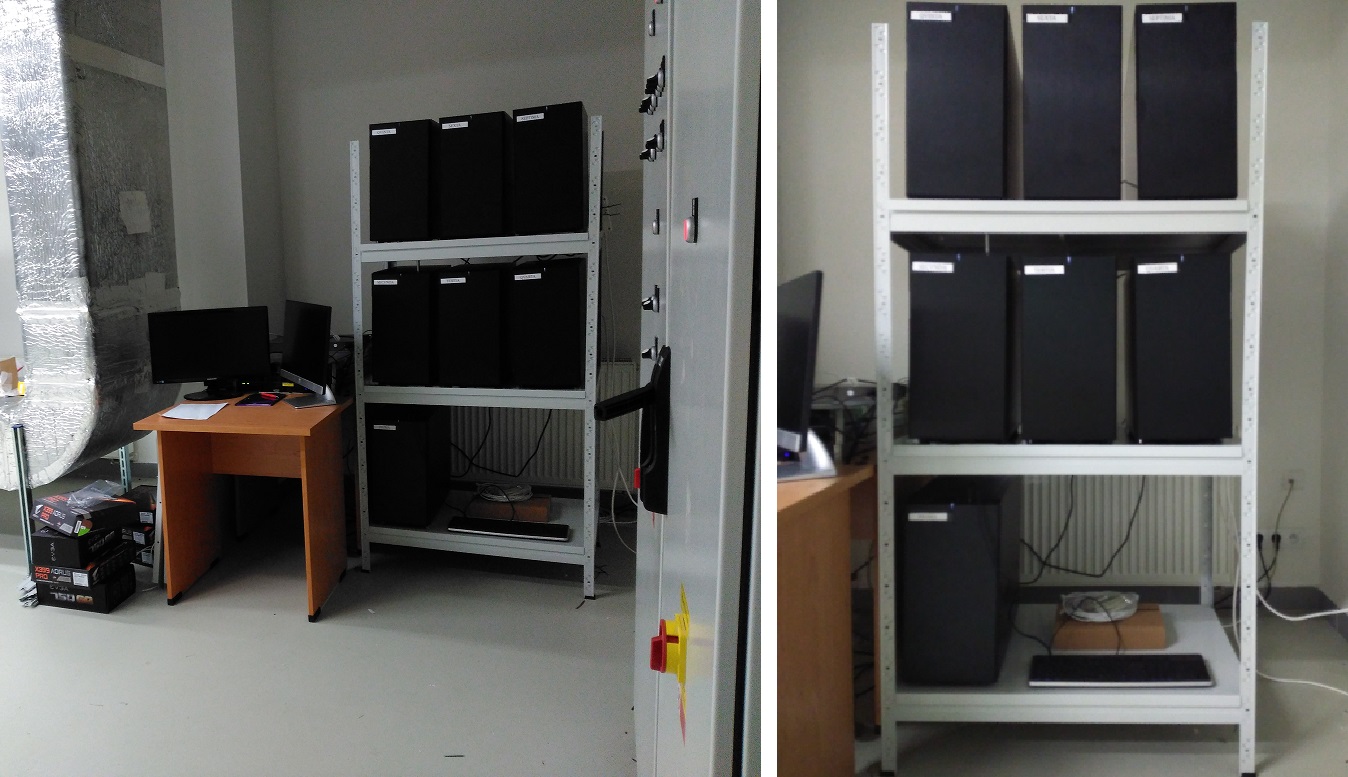
Oto is a computational solid-state physicist. In our group, he deals with the hardware and software problems regarding the implementation and applications of quantum-mechanical tools and evolutionary algorithms (EA) for prediction of the crystal structures. He has been developing computing tools for automation of various computational tasks and data processing. | |
 | Sankari Sampath
Sankari was part of the group as a postdoc researcher funded by a postgraduate program of Slovak University of Technology since 2019 until 2021. Her research at ATRI focused on the DFT modelling of novel copper oxides. Apart from the scientific work, he enjoys painting, photography, writing poetry, and exploring new places. |
 | Michaela Gašpárková
Michaela was a member of the Computational Materials Design Research Group since spring 2019 until summer 2021. She joined the group while working on her master thesis as a graduate student of the Materials Engineering program at MFT STU. She focused on DFT modelling of crystal and magnetic structures of poorly characterized nickel (III) oxides and determination of their dynamic and thermodynamic stability. |
 | Matej Uhliar
Matej was a member of the Computational Materials Design Research Group since spring 2018 until summer 2021. He joined the group while working on his bachelor and master theses as a (under)graduate student of the Materials Engineering program at MFT STU. In his bachelor thesis, he focused on DFT modelling of the chlorine-enriched crystal lattice of silver. In his master thesis, he combined DFT mocelling with evolutionary algorithms to predict novel binary chlorides with varying Ag/Cl ratios. Outside science, he is an amateur writer of short stories and an instructor of self-defense with application of Asian martial arts. Matej is currently a PhD student of physical chemistry at the FCHPT STU. |
 | Matej Bezák
I am a high school student studying the International Advanced Levels curriculum and am really excited to have had the opportunity to be part of a research team at ATRI MTF alongside my studies. During my internship in 2024, I have had hands-on engagement in the quantum mechanical modeling of crystal structures using the Density Functional Theory method, while also learning to use the program VESTA for crystal structure visualization and conducting smaller research on the categorization of peroxides and superoxides. I am excited to have published a record of my research journey so far, and I am looking forward to the future projects that await me. |